
Animal Classification is usually one of the harder topics for Primary 3 students. It requires students to be able to identify what are the possible classifications that can be used and determine which particular classification is relevant to the question.
Read Also
Some of the common classifications for animals are:
- Number of stages in their life cycles
- If the young looks like their parent
- The place the animals live in
- If the animals spend part of their life cycle in water
- Methods of reproduction
- Outer covering
- The way the animals move
- And more…
For The Question Below…
Students are firstly required to think of the possible classifications and analyse if all the animals in each group can fulfil the characteristics of each particular classification.
If one or more of them do not fit in that classification, that classification should be eliminated and they should repeat the same thought process for all other possible classifications.
Animal Classification Question Analysis
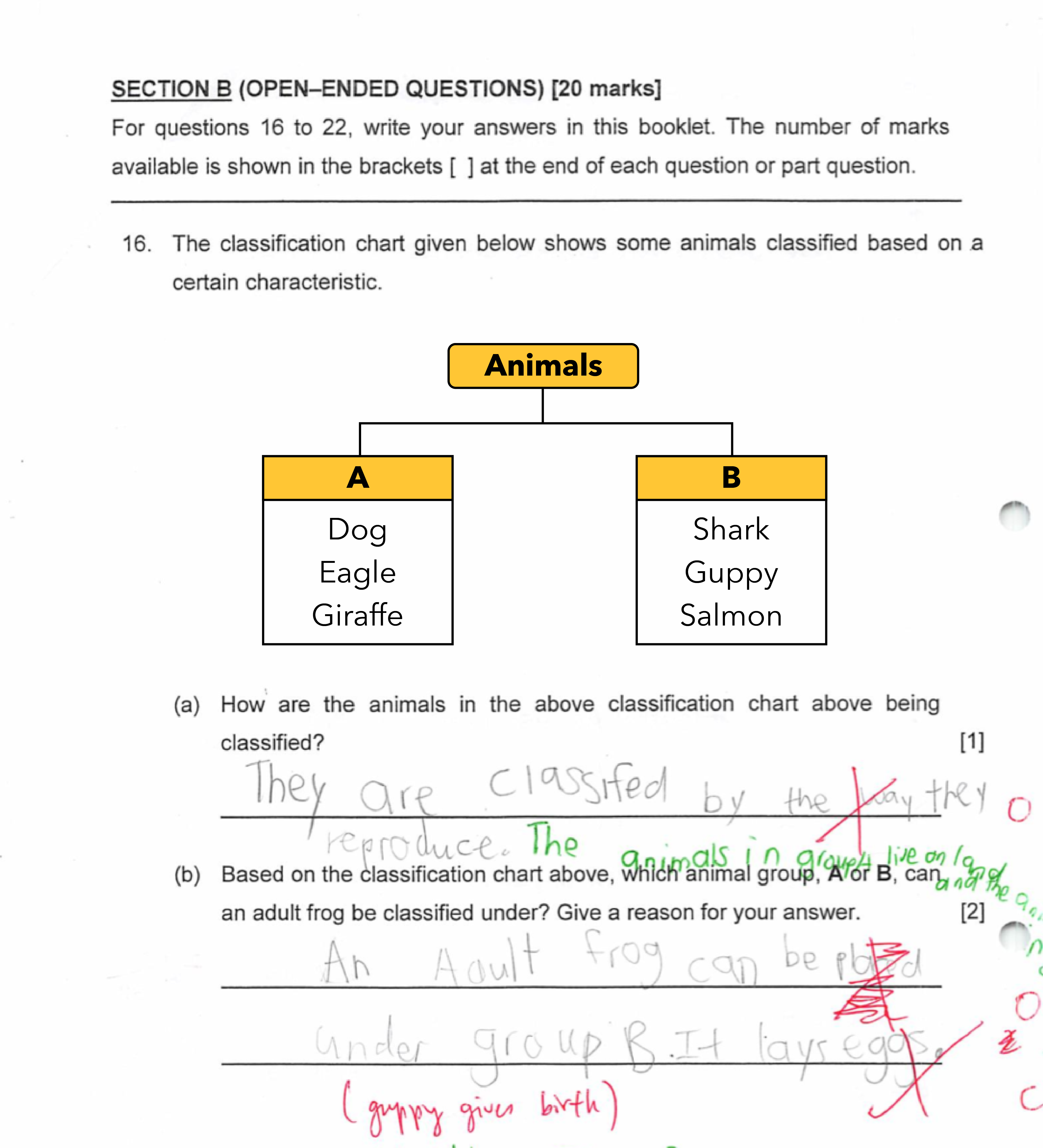
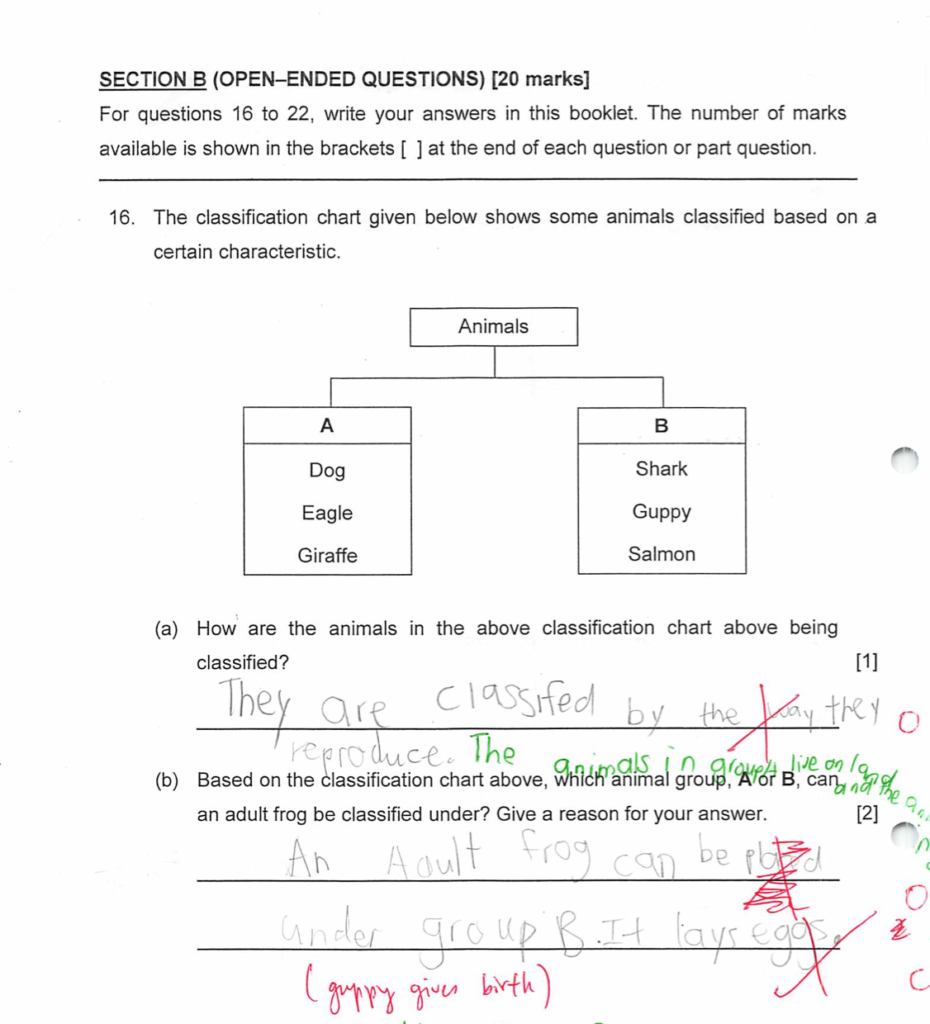
For this question on Animal Classification, the dog, eagle and giraffe are categorised together, whereas the shark, guppy and salmon are categorised together in another group.
Students may attempt to categorise Group B as “Fish” but in Group A, dog and giraffe are mammals whereas eagle is a bird.
Hence, this form of categorisation is incorrect.
The correct classification for this question would be the place the animals live in – Group A: live on land and Group B: live in water.
Here’s A Step-By-Step Method To Tackle Animal Classification Questions
Step 1: Identify the group of animals that the living organism belongs to.
There are 6 types in total (this should not be too difficult for your child to manage):
- Mammals
- Fishes
- Birds
- Insects
- Reptiles
- Amphibians
Step 2: List the characteristics of each animal group using the following pointers:
- Method of reproduction?
- Type of body covering?
- Warm or Cold blooded?
- Method(s) of breathing?
- Live on land or in water?
- Other special characteristics?
*Do note that these pointers should serve as reference guidelines. The comprehensive set of similarities and differences in their characteristics are covered in the weekly Grade Accelerator Program™ lessons. Click here to learn more about the program.
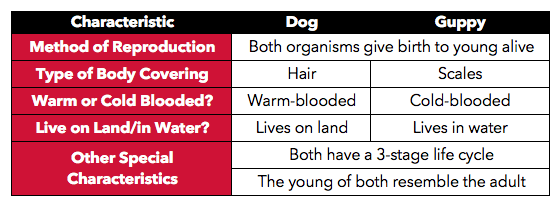
Step 3: Pick any 2 animals and list all the possible similarities and differences between the animals
For example, let’s pick Shark and Dog.
The guppy belongs to the group of “Fishes” while the dog belongs to the group of “Mammals”.
Many of our students at The Pique Lab have been enlightened after using this step-by-step method to tackle Animal Classification questions.
This method is designed to be easy and simply to apply. Try this exercise with your child & you’ll see noticeable improvements in your child’s analytical skills over time.
If this method works for them, I’m sure it’ll work for your child too! 🙂
1 comment