
Introduction
Imagine this: You tried pouring water into an empty air-tight bottle but it could not enter.
Can you explain why?
In this P4 blog post on Matter, we will use a relatable analogy to help you understand why water cannot enter the air-tight bottle.
You can also watch my explainer video for free by visiting our YouTube channel.
Let’s Take A Look At This Matter Question

Source: Singapore Chinese Girls’ School – 2019 P4 SA2 Examination Paper [Q17]
Read Also:
Thought Process
The question wants us to choose the statement that best explains why water could not enter the air-tight bottle.
Before we go through our options, we have to understand what is going on in our diagram first.
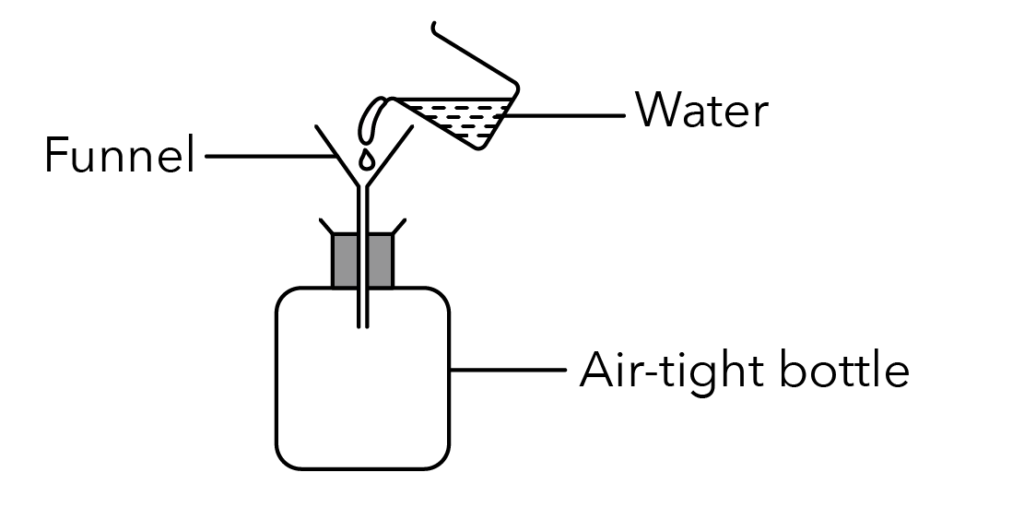
Source: Singapore Chinese Girls’ School – 2019 P4 SA2 Examination Paper [Q17]
In our diagram, we see an empty air-tight bottle.
But my question to you is, is the bottle really empty?
Think about it — what can you find in the bottle that is invisible?
You can find air in the bottle!
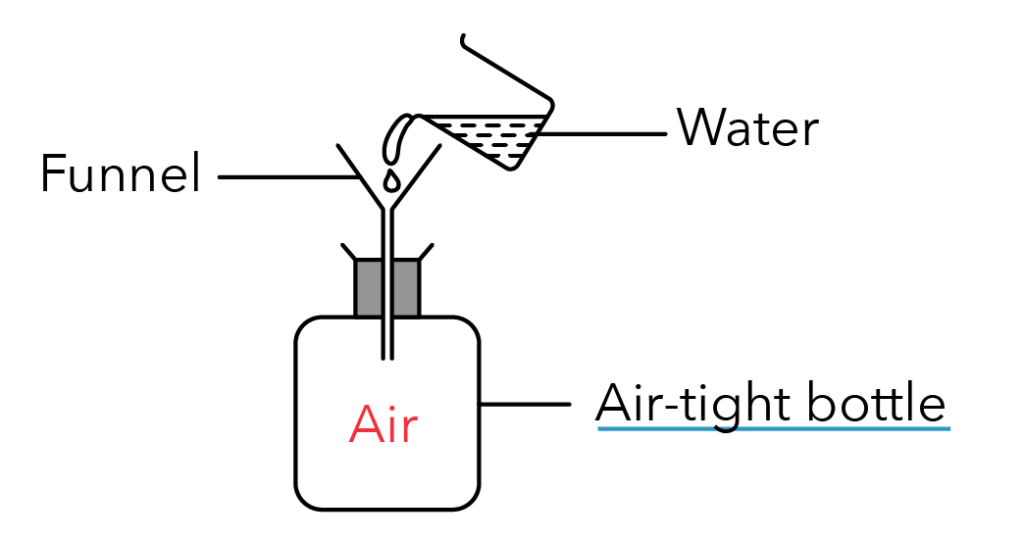
Is air a matter? Yes, air is a matter. Remember that all matter occupies space.
So if air is a matter, it also needs to occupy space in the bottle.
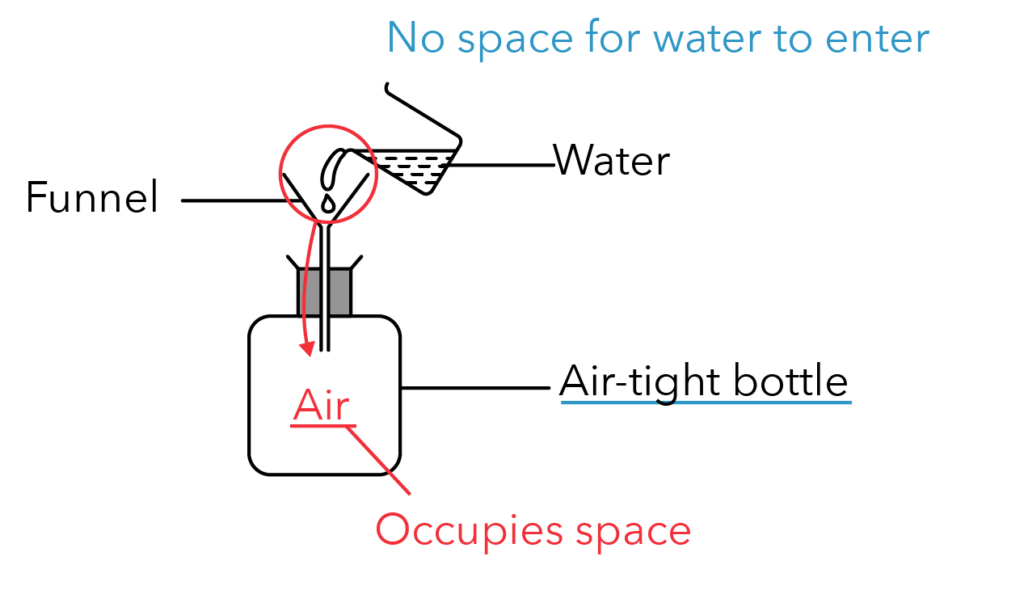
If air is already occupying space in the bottle, do you think there is still enough space in the bottle for the water to enter?
No, there is no more space for the water to occupy now.
Let’s Use An Analogy To Help You Understand
Imagine that you entered the classroom and you saw your friend sitting in your favourite seat.
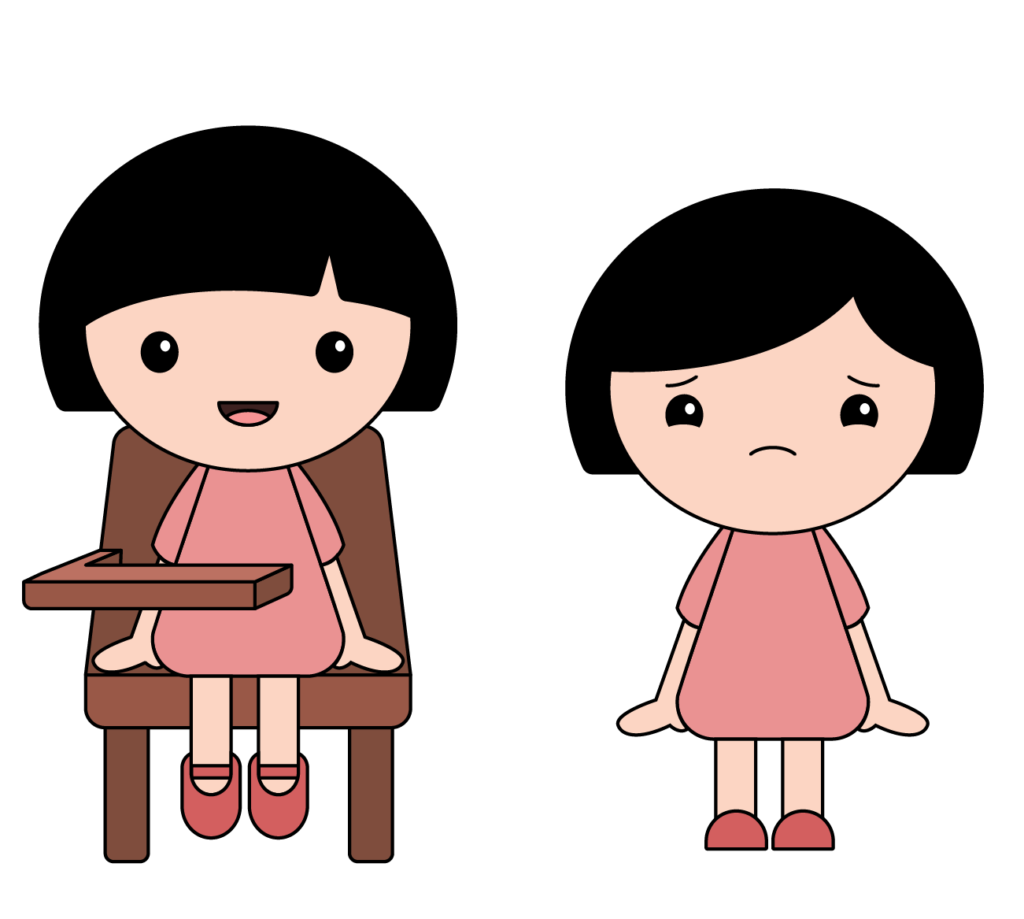
If your friend is sitting in your favourite seat, can you still sit in the same chair? You cannot. Why? This is because your friend is occupying the space on the chair.
Let us link this analogy back to the question.
Air, which is like your friend, occupies space in the bottle. So do you think there is still space for the water to enter the bottle now?
No. So let us annotate this on the diagram first.
Water could not enter the air-tight bottle because there was no more space for it to occupy.
Let us now look through the options to see which best explains the observation.
Let’s Analyse Option (1)

Is this statement correct?
Yes! This is because water is a matter and all matter has mass.
But, does this statement explain why water could not enter the air-tight bottle?
Remember, water could not enter the air-tight bottle because there was no more space.
Even though we know that option (1) is correct, it does not explain why water could not enter the air-tight bottle.
Therefore, option (1) is incorrect.
Let’s Analyse Option (2)

Does this explain why air could not enter the air-tight bottle?
Yes, this is correct!
Remember, we concluded that there is no more space for the water to enter because air already occupies the space in the bottle.
Therefore, option (2) is correct!
But before we conclude that it is the correct answer, let us check why other options cannot be the answer.
Let’s Analyse Option (3)

Is this statement correct?
What is air? Air is a gas. Do gases have a definite volume?
No, they don’t have a definite volume.
If they do not have a definite volume, can gases be compressed?
Yes, gases can be compressed.
Therefore, option (3) is wrong because air can be compressed.

Let’s Analyse Option (4)

Water is a liquid.
Do liquids have a definite shape?
No, liquids don’t have a definite shape.
So if a liquid has no definite shape, can it take the shape of the container? Yes!
Therefore, option (4) is correct. But does it explain why no water can enter the air-tight bottle? No.
Remember that water cannot enter the air-tight bottle because there is no more space for it.
Therefore, option (4) does not explain the observation.
Suggested Answer

Now that we have analysed all our options, we can conclude that the correct answer is option (2).
Conclusion
In the experiment conducted above, water cannot enter the air-tight bottle even though it seems empty because air already occupies the space inside the container.
Remember that matter occupies space. Air is a matter so it also occupies space in the bottle.
To help you better understand, we related it to the analogy of your classmate sitting on your favourite chair. You can no longer sit there because your friend is already occupying the space on the chair.
Also, remember to always read the questions carefully! While some options may be factually correct, they do not answer the question.
Stay tuned for more Matter blog posts!

1 comment